
When Bobby Met Willie
Willie Dixon, Bob Weir, and the history of "Eternity."

In the early nineties, Bob Weir collaborated with one of the greatest blues songwriters of all time. They wrote one song. When the Grateful Dead first played the song in 1993, it was as controversial as any new Dead song. It was a laid back bluesy tune about making love through eternity. Thirty years later, “Eternity” stirs emotions as mixed as it did back then. Are the lyrics simple, or are they profound in their simplicity? Does the chorus suck, or did the Grateful Dead just whiff the harmony every time they tried? And how in the hell did Bob Weir write a song with Willie Dixon?
Willie Dixon
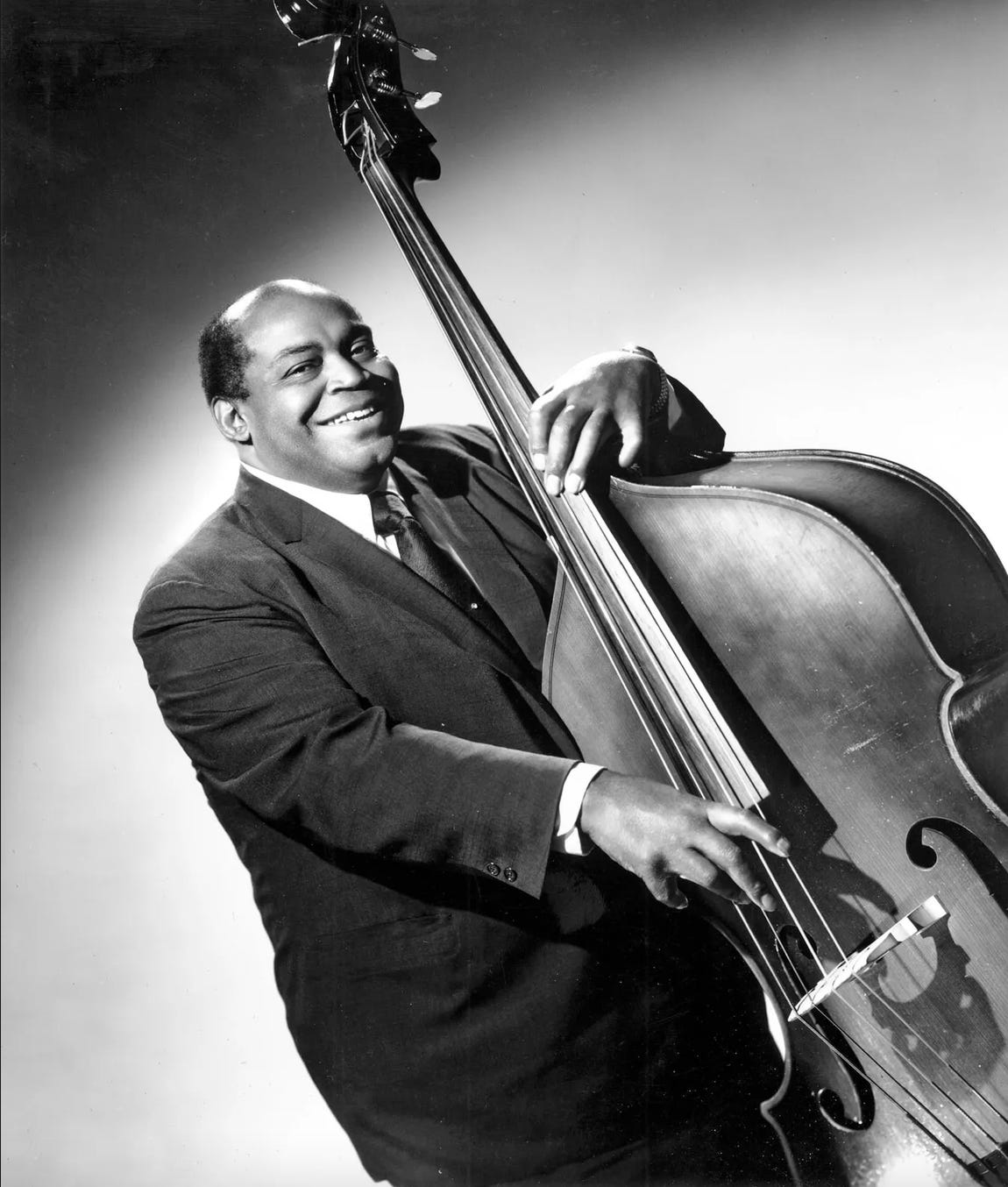
Willie Dixon was a blues musician, born in Vicksburg, Mississippi in 1915. Dixon was interested in music at a very young age, singing songs in church. As a teen he spent time on prison farms, where his fellow inmates taught him the blues. A local carpenter with a gospel quintet taught Dixon how to harmonize. He started writing songs, and quickly started selling them to local bands.
At the age of 21, Dixon left Mississippi for Chicago. After a brief successful stint as a boxer, Dixon befriended blues guitarist Leonard Caston. The two met at a boxing gym, bonding over their love of singing in harmony. Caston would build Dixon his very first bass, and set him on a path of making music professionally. The two played in groups together throughout the late thirties. Dixon’s music career was briefly put on pause when he was jailed for conscientiously objecting to serving in World War Two. Following his release, Dixon rejoined Caston in a new band, and they played together throughout the forties.
He was a regular in the Chicago blues scene, playing at clubs owned by the Chess brothers, Chicago nightclub magnates. When the Chess brothers turned their attention to the record industry in 1948, they signed Dixon as a session musician. Dixon impressed the company with his skill as an arranger and songwriter, and he began to perform less. He wrote a number of hit songs for the label, and eventually began to scout talent.
Dixon’s first major break-through came in 1954. Muddy Waters recorded his song “Hoochie Coochie Man,” a slow but energetic blues number about how good the narrator is at fucking. The song was Waters’ biggest hit at the time, and became a staple of the blues scene. Following this, Chess pushed many of their artists to record Dixon’s songs. In addition to Waters, Dixon’s songs were recorded by the greats of blues and early rock and roll like Howlin’ Wolf, Bo Diddley, Little Walter, Sonny Boy Williamson, and Koko Taylor. These were songs like “Spoonful,” “Wang Dang Doodle,” “Little Red Rooster,” and other blues standards.
It is sort of impossible to overstate Dixon’s impact on the history of blues and rock and roll. He remained in demand as a session musician as well, playing many of the bass parts on his songs. He was also a regular bass player for Chuck Berry during the fifties, playing on songs like “Johnny B. Goode.” Several of the early Rolling Stones hits were covers of Dixon songs. Even poppier singers like Sam Cooke were recording his songs.
By the mid-sixties, Dixon had grown frustrated with Chess Records. Despite writing dozens of hit songs, he was only making $100 a week. He later founded his own publishing company, and spent much of the seventies and eighties fighting in court for blues songwriters to be properly credited and compensated. He also returned to performing live shows.
Ultimately, there is no way to sum up Willie Dixon’s historic career and life without doing him a little bit of a disservice. But that’s what you need to know for our story: an incredibly impressive songwriter who was fundamental to the history of the blues.
Dead Do Dixon
The blues is inextricably tied to the San Francisco sound. The counterculture in San Francisco sprung from the roots of the Beat Generation. And while the beatniks tend to be associated with their love of jazz, they also dug the blues. The blues is raw, emotionally powerful music played honestly and simply- something many of the beats aspired to in their own work.
The hippies loved the blues ever more than the beatniks did. At risk of oversimplying, the blues is often about turning suffering into joy. That joy was a major part of the shift in energy from the beats to the hippies. The hippies loved Chicago Blues, and began to emulate it. Most bands we think of as psychedelic rock started off as white blues bands, playing blues standards mixed with their original songs.
One of these bands was a little rock group from Palo Alto called The Grateful Dead. The Grateful Dead loved the blues, their early setlists are filled with blues covers. Most of these were sung by Pigpen, revered in the scene for his encyclopedic knowledge of the blues. The Rolling Stones were also a big influence on the Grateful Dead. Jerry Garcia has talked about how the band got early gigs by knowing how to play Rolling Stones songs. Many of their early covers came from songs The Stones covered, which was a lot of blues.
The first Willie Dixon song shows up pretty quickly in Grateful Dead rotation. They first covered “Little Red Rooster” in 1965, though no audio recording exists. This was quickly followed by “The Same Thing,” first played in 1966 - only two years after the original was released. Sung by Pigpen, the band kept it close to Muddy Waters’ arrangement of the song. The only noticeable difference was that the Dead played it a lot slower. They played it a few times over the next year, and then dropped it in favor of other blues covers. Around the same time, the band did a one-off performance of Dixon’s “I Just Want to Make Love to You,” in an arrangement inspired by The Rolling Stones’ cover of it.
The Grateful Dead began to move away from the white blues sound in the late sixties, especially as the band grew interested in country music. After Pigpen’s 1972 passing, many of the blues covers were dropped altogether. There was still a loose connection between Dixon and the Grateful Dead in the seventies - they still covered a lot of the Chuck Berry songs that Dixon played bass on, like “Johnny B. Goode” and “Around and Around.” But that’s tangential.
In the eighties, the Grateful Dead started picking up new blues covers again. I can’t tell you exactly why. Maybe the players got reintroduced to the songs. Maybe they wanted a 12-bar blues for new keyboardist Brent Mydland to sink his teeth into, or wanted to honor Pigpen with a blues cover every night. Maybe Bob Weir rediscovered his love of Willie Dixon or The Rolling Stones. Regardless of the motives, it became a substantial part of the band’s setlists.
At the tail end of 1979, the band introduced the blues standard “C.C. Rider” to the repertoire. It sets the template for the later covers; Bob sings lead vocals, then Jerry, Brent and Bob take solos. The band was not content to just play “C.C. Rider,” the band turned to Willie Dixon’s songs. It was the dawning of the age of “Little Red Rooster.”
The Grateful Dead’s first “Little Red Rooster” in fifteen years was played on August 19th, 1980 in Chicago, where it opened the second set. Chicago blues in Chicago. Weir’s rendition is closer to the Rolling Stones’ arrangement, though still pulling from Howlin’ Wolf - the guitar phrasing comes from Wolf, but the vocal phrasing is 100% Jagger. It’s a strong rendition, with the whole band bringing energy. The song very quickly endeared itself to the band, and stayed in regular rotation through the end of the Grateful Dead’s days.
As the eighties continued, the band carved a dedicated spot for blues songs in nearly every first set. This wasn’t exclusive to Dixon, but many of these covers were his. “Spoonful.” “Wang Dang Doodle.” By the mid-eighties, the band played so many Willie Dixon covers they started mashing them up, always pairing “Down in the Bottom” with “I Ain’t Superstitious.”
These songs weren’t universally beloved by Deadheads, or at least the band's covers of them. “Little Red Rooster” proved especially divisive1. Weir would often take an extended slide guitar solo during the song, and fans often joked he was still learning how to play it. There was also debate about whether or not Bob’s voice sounded right on blues songs2. There were others that enjoyed them, believing it harkened back to the early days of the band. Garcia and Mydland could always be counted on to rip a mean solo. But like them or lump them, the blues covers were here to stay.
And little did Deadheads know there was still one more Willie Dixon song to introduce…
When Bobby Met Willie
Before we get to that, there’s one more character we need to meet for our story. Rob Wasserman was a bass player and composer from San Mateo, California. Initially backing musicians like David Grisman and Van Morrison, Wasserman used his eclectic taste in music to collaborate with a wide variety of musicians. His 1988 album Duets featured collaborations from as wide a range as Lou Reed to Bobby McFerrin. Deadheads will know him for his collaborations with Bob Weir, but this is long before.
In 1989, Wasserman was in the early stages of his next album. He had done an album of solos and an album of duets, so it was time for an album of trios. And he knew he wanted Willie Dixon to play on it. Wasserman had been a long-time admirer of Dixon’s, impressed by both his compositions and his bass playing. So when he saw that Dixon was playing at the local Sweetwater Saloon, he knew that was his chance. See the show, meet Dixon, and invite him to play on the album.
After the show, Wasserman went to the basement of Sweetwater. While waiting to meet Dixon, he started chatting with some local musician who was waiting for the same thing. This guy wasn’t looking to collaborate with Dixon, just wanted to pick his brain about songwriting. He was a guitar player and a singer in some rock band. Bob Weir. When Dixon was ready, he met Weir and Wasserman. He chatted with both musicians, accepting Wasserman’s invitation to appear on the Trios album.
A couple of months later, Weir and Wasserman played their first show together at Sweetwater. Their impromptu set lasted an hour, and the two men felt an instant musical chemistry. At the same time, Wasserman continued a friendship with Dixon. Wasserman played bass in Dixon’s Dream Band, a one-off all-star ensemble. The two recorded Dixon’s composition “Dustin’ Off the Bass” with drummer Al Duncan for Trios. The two would chat into late hours, Wasserman enthralled with Dixon’s stories.
Dixon and Weir were not as close, but still maintained a friendship. Dixon was impressed with the odd chord voicings that Bob Weir had used in his songwriting, but wanted to encourage him to try a little more simplicity. So a plan was made for the three of them to write a song together. Dixon would write most of the lyrics, Weir would write most of the music with help from Wasserman.
Weir initially showed Dixon some melodies and chord progressions he had been working on, which inspired Dixon to write lyrics. When Weir first read the lyrics, he found them a little too simplistic. But Dixon encouraged Weir to lean into the simplicity of the lyrics and find the depth behind them. As Weir tells it, “By the time I had sung through them, it’s like my head is suddenly eons wide. I can hear what’s happening just sort of echoing around in there and I’m astounded by the simple grace of what he has just presented to me. I’m sitting there with my mouth open literally, and Willie’s laughing. He’s just sitting there laughing, saying, ‘Now you see it. Now you see it. That’s the wisdom of the blues.’”
The song was a little blues number called “Eternity,” about how powerful it is to love someone forever. The verses expand on the idea of forever, what it really means for something to go on for eternity. After writing, Weir, Wasserman and Dixon worked collaboratively on an arrangement for the song- two guitars and a bass. With everything set, they recorded a demo. For a while, that was that. In a later interview, Wasserman claimed that Dixon wrote another song for Weir and Wasserman to record on an album, but that album never came to pass.
In 1992, Willie Dixon passed away. The Grateful Dead paid tribute by playing “The Same Thing” for the first time in over twenty years. With Weir on vocals, the song became a regular part of the repertoire through the end of the band. “Eternity” did not wind up on Wasserman’s Trios album, though the demo was released as a bonus track in some countries. The album was dedicated to Dixon.
On February 21st, 1993, the Grateful Dead played “Eternity” for the first time. The arrangement was fairly faithful to the original demo, now adding the expanded band. Like many nineties Dead songs, the chorus is now built around harmonies of very spicy cluster chords. The biggest change was adding an instrumental jam section in the middle of the song. The debut performance is solid - they get a little lost at times, but it doesn’t sound as busy as later versions of the song will.
As the nineties continued, the band continued to fine tune the arrangement of the song. Weir had been experimenting with his new acoustic-electric guitar, and would play it on “Eternity.” This changed the timbre of his guitar part and made the whole song sound closer to the original demo. Keyboardist Vince Welnick was constantly playing with new keyboard sounds to fit the song. The band planned to record it on their nineties studio album that ultimately never came to pass.
Having done a random sampling of “Eternity,” I think the strongest version they played was on April 2nd, 1995 at The Pyramid in Nashville, Tennessee. The band is sharp, leading to an incredibly spirited rendition with a strong jam. Bob’s vocals are maybe the most enthusiastic I’ve ever heard on the song. I’m not alone in loving this version. In 2019, it was chosen for Ready or Not - a compilation using live tracks to simulate the unfinished studio album.
Like many nineties Grateful Dead songs, “Eternity” had its supporters and its detractors. Some didn’t like Weir’s take on the vocals, or didn’t think the band ever really nailed the harmonies. Some found the playing a little busy, with Welnick and Garcia often stepping on each other’s toes. Personally, I came into this project a bit of an “Eternity” hater, associating it with the sloppy chorus. But the more I dug into it, the more versions I found where they really nail it. That jam can lead to a special kind of magic.
After Garcia’s passing, Weir kept “Eternity” in rotation in all of his solo projects. But only his solo projects. None of the later reunions of members of the Grateful Dead played “Eternity.” These bands played many Willie Dixon covers, but not the song Willie Dixon wrote with one of their own. Even most cover bands skip this one. Maybe that was for the best. Or maybe not. What do you think of “Eternity.”
I think the best Little Red Roosters are 2/26/81; 9/3/85; 12/31/87; and 3/30/90
Shared a very neutral statement about the history of “Little Red Rooster” a few days ago, and within an hour I had people arguing in the replies about whether or not Bob sounded good on the songs.